




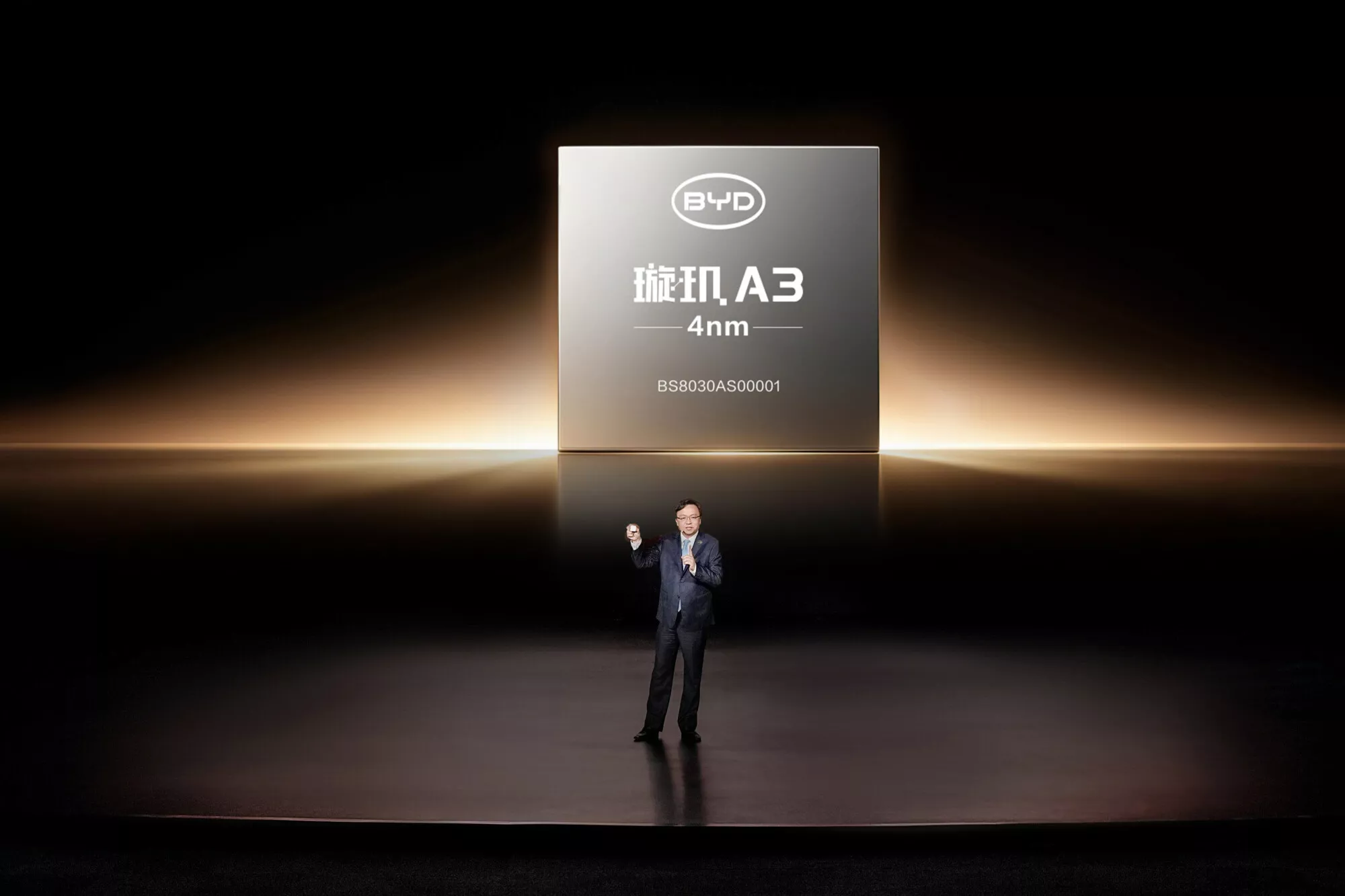

BYD has announced a new driver-assistance programme for China alongside its XUANJI A3 automotive processor. The release combines a financial commitment around Urban Navigate on Autopilot with hardware and software developments for the company's God’s Eye system.
According to BYD, the one-year Full Damage Coverage programme applies to new customers and existing Chinese-market owners who update to God’s Eye 5.0. It describes direct coverage of financial losses from qualifying incidents during lawful use of Urban NOA where the user bears legal responsibility. The announcement places that commitment in China and ties it to specified software and operating conditions.

What the technology announcement includes
BYD also says its Chinese model range can now be specified with a LiDAR-equipped version of God’s Eye. It describes a revised XUANJI Architecture 2.0, further development of its driving AI model and learning from real-world scenarios. The company reports more than 3.15 million vehicles with its intelligent assistance systems and a development team of around 5,000 engineers.
The new XUANJI A3 system-on-chip uses a 4 nm manufacturing process. BYD says a configuration with three chips can provide more than 2,100 TOPS per vehicle, and describes the hardware as supporting future Level 3 and Level 4 applications. These figures describe processing capability and the intended technical platform. Deployment of a particular automated-driving function also involves the vehicle, software and approval conditions for its market.
The cabin receives a separate DiLink AI assistant, which BYD says can understand and proactively carry out more tasks inside the vehicle. Together, the announcements show where the company's Chinese-market software development is heading.
For BYDbase readers in Europe and the Americas, the useful distinction is the market and software version attached to each feature. This release provides a China-specific technology update. Local vehicle specifications, authorised functions and programme terms remain the documents to consult for an individual car.
Press photographs
Adapted by the BYDbase editorial team from the official BYD press release published 02 June 2026. Published on BYDbase by PTiCA. Photographs © BYD.
This article is filed under the original press-release date. Editorial adaptation and source check completed on 6 November 2026.
Recommended Comments