





Redaction
Moderators
-
Joined
-
Last visited
Never
Everything posted by Redaction
-
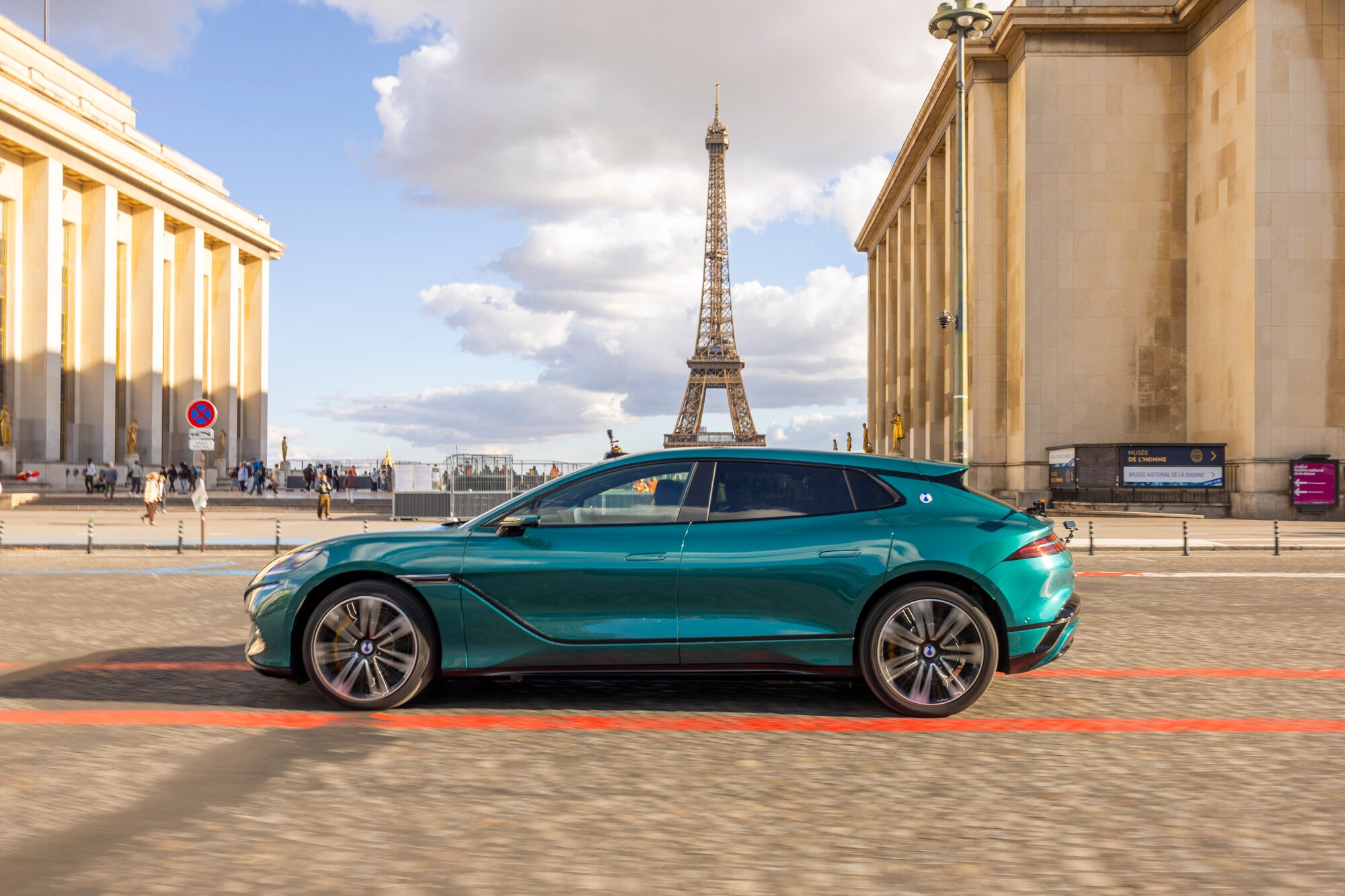 DENZA has announced a planned 2027 over-the-air (OTA) update for the Z9GT that would introduce City Navigation on Driving Assistant, or CNOA. The announcement identifies the hardware package and the legal condition for deployment, but it does not by itself confirm a launch date, an approved software release or availability in every European market. CNOA is planned as an OTA update, not yet a market-ready feature An OTA update is software delivered remotely to a vehicle rather than installed only during a workshop visit. DENZA says the planned CNOA rollout will begin with the Z9GT in 2027. That wording describes the company’s plan; it does not establish that the update will be available to all Z9GT vehicles, in all European countries, on the same date. The company’s announcement also does not provide a detailed list of supported roads, manoeuvres, operating speeds, driver-monitoring requirements or regional rollout stages. Those details are important because a navigation-assisted driving function can be limited by software configuration, local rules, vehicle equipment and the approval granted for a particular version. One LiDAR and 26 other sensing devices form the stated hardware set DENZA lists one LiDAR sensor, 11 cameras, three millimetre-wave radars and 12 ultrasonic sensors for the system. LiDAR measures surroundings using laser pulses, while cameras, radar and ultrasonic sensors provide other forms of environmental data. The supplied announcement confirms the number and types of sensors, but it does not specify their individual fields of view, detection ranges, redundancy strategy or the exact functions assigned to each sensor. This distinction matters when comparing a planned assistance system with a production specification. The listed sensor set describes the hardware cited by DENZA for CNOA; it is not, on its own, proof that every function associated with the name will be enabled in every market or on every vehicle described as a Z9GT. UN Regulation No. 171 is the condition for introduction DENZA says CNOA requires type approval based on UN Regulation No. 171 before market introduction. Type approval is the formal process by which a vehicle or system is assessed against applicable technical requirements. It is therefore separate from the company announcing an intended OTA timetable. Until that approval is obtained, the 2027 date should be treated as a stated target rather than confirmation that customers can activate CNOA. Approval may also be relevant to the exact vehicle and software configuration: a feature announced for one version should not automatically be assumed to apply to another market specification. Driver responsibility remains in place DENZA explicitly states that the driver remains responsible while using CNOA. The announcement therefore presents the system as a driver-assistance function, not as permission to transfer responsibility for the journey to the vehicle. The driver-responsibility statement also does not replace the need for type approval or define the system’s eventual operating limits. DENZA UK’s news index lists the announcement dated 12 October 2026. The company’s European communication confirms the proposed update, its stated sensor package and the approval requirement. It does not yet confirm the final approved feature set, country-by-country availability or a customer installation procedure. Sources https://media.byd.com/denza-confirms-intelligent-drive-tech-for-europe-in-2027/?lang=enghttps://denzaukmedia.com/en/news.htmlhttps://unece.org/transport/documents/2024/06/standards/un-regulation-no-171-technical-requirements-approval-vehicles
-
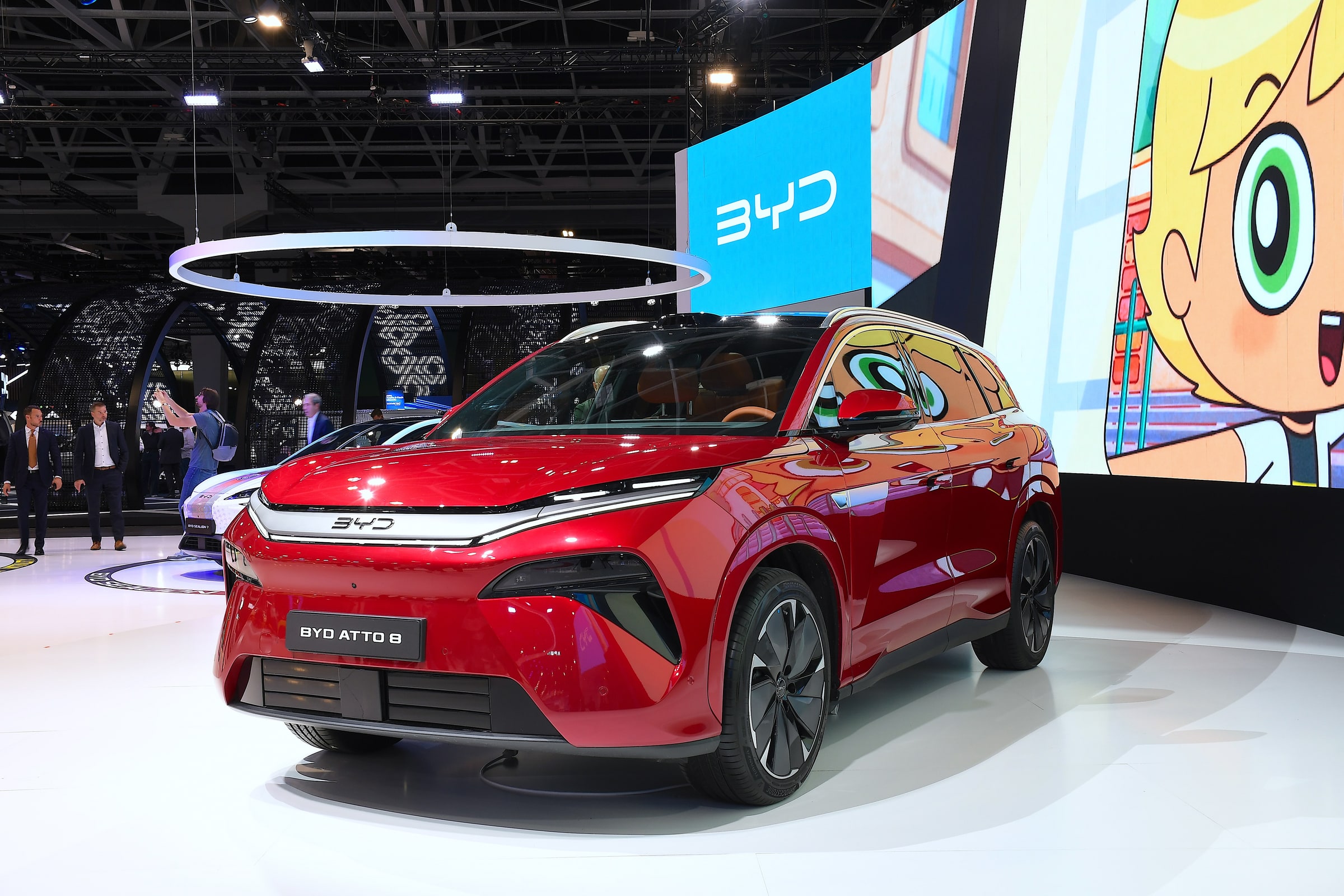 BYD says the new seven-seat ATTO 8 will be its first European electric vehicle equipped with Flash Charging, claiming a recharge from 10% to 97% in nine minutes. The large SUV is also announced with a 115 kWh second-generation Blade Battery and up to 653 km of combined WLTP range. The figures come from BYD’s announcement of the model at the Paris Motor Show. They describe the manufacturer’s stated performance for the ATTO 8 and its Flash Charging system, rather than an independent charging test. Buyers will therefore need to distinguish the nine-minute headline from the time available at a particular charging site and from results achieved in everyday use. What BYD has announced According to BYD, the ATTO 8 combines a seven-seat body with the company’s second-generation Blade Battery, rated at 115 kWh. Its maximum stated range is 653 km on the WLTP combined test cycle. WLTP is the European laboratory testing standard; the quoted figure is not an EPA or CLTC result and should not be transferred to those markets. BYD’s central charging claim is a 10–97% recharge in nine minutes using Flash Charging. The unusually broad charging window is important: the claim does not describe a smaller top-up from a low state of charge, but the interval specified by BYD. It also does not, on the information currently available, establish that every ATTO 8 or every compatible public charger will reproduce that time. Why the nine-minute figure still needs verification Charging performance is tied to the complete system, not only to the battery’s nominal capacity. The result announced by BYD will need to be assessed against the final European vehicle specification, the charging equipment used, and the conditions under which the measurement is made. The supplied announcement does not provide an independent test of the claim or a country-by-country list of public charging locations capable of delivering it. That distinction matters for interpreting the ATTO 8’s launch message. A manufacturer claim can establish what BYD is targeting with Flash Charging, but it cannot by itself show how consistently the same result will be available across Europe. Independent tests and operating data will be needed before the nine-minute figure can be treated as a typical journey-planning expectation. European timing remains ahead The ATTO 8 is presented as a European model announcement, but the available information does not include prices, detailed country allocations, final trim levels or market-specific charging specifications. Autocar reports that the SUV is due to go on sale across Europe in the first quarter of 2027. Until sales begin, the 653 km WLTP range and nine-minute 10–97% recharge should be read as announced specifications and claims rather than independently verified ownership results. Sources https://media.byd.com/byd-launches-atto-8-flagship-suv-with-flash-charging-at-paris-motor-show/?lang=enghttps://images.cdn.autocar.co.uk/car-news/new-cars/byd-atto-8-seven-seat-skoda-peaq-rival-764bhphttps://insideevs.com/news/811664/byd-flash-charging-five-minutes
-
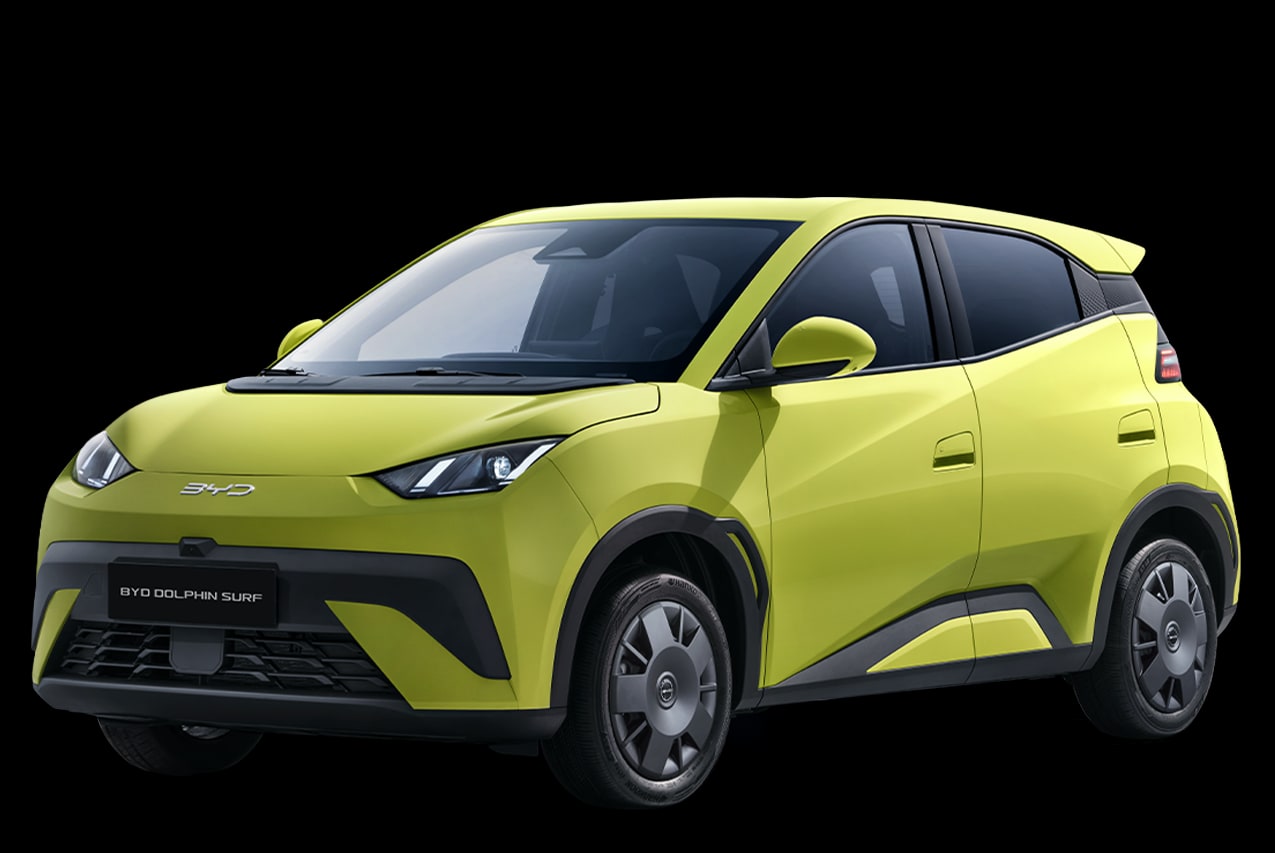 The main technical issue highlighted by Green NCAP’s assessment of the BYD DOLPHIN SURF Boost is the gap between warm-weather and cold-weather electric-car efficiency. The tested version uses a 43.2 kWh battery and has a system output of 65 kW (approximately 88 hp) and 175 Nm. In Green NCAP’s estimated mixed-driving results, energy consumption increased substantially in cold winter conditions, reducing the estimated range from 292 km (181 miles) to 210 km (130 miles). How the Boost’s measured energy use changes with temperature Green NCAP estimated mixed consumption at 16.8 kWh/100 km in warm weather. Under cold winter conditions, the figure rose to 23.4 kWh/100 km. That is an increase of 6.6 kWh/100 km, or roughly 39% compared with the warm-weather result. Consumption expressed in kWh/100 km describes how much electrical energy the vehicle is estimated to use to travel 100 kilometres. A higher figure means that the same battery stores fewer kilometres of usable travel, although the final range estimate also depends on the test procedure and the energy available to the vehicle. Cold conditions can affect several parts of an electric car’s operation, but the supplied Green NCAP results do not separately identify the contribution of the battery, cabin heating, tyres or other systems. The corresponding estimated mixed range was 292 km (181 miles) in warm conditions and 210 km (130 miles) in cold winter conditions. The 82-km difference is important when interpreting a small battery: a result that appears adequate in mild weather can provide a materially smaller operating buffer during winter journeys. Why these figures should not be confused with WLTP Green NCAP’s numbers are independent estimates from its assessment and are not a replacement for the vehicle’s declared WLTP figure. WLTP is a standardised laboratory test used for official type-approval and market information in relevant European markets, while Green NCAP reports results from its own assessment conditions. The two sets of figures therefore should not be treated as interchangeable, and the Green NCAP results supplied here do not establish a specific WLTP range for this Boost version. The battery capacity also needs careful interpretation. The 43.2 kWh figure identifies the battery specified for the tested car, but it does not by itself determine real-world range. Consumption, temperature and test conditions all affect how many kilometres can be covered. For an owner comparing journeys, the most useful information in this assessment is therefore the combination of both results: 16.8 kWh/100 km and 292 km in warm conditions, versus 23.4 kWh/100 km and 210 km in cold winter conditions. Safety and sustainability results refer to different assessments Green NCAP awarded the 2026 DOLPHIN SURF Boost a five-star sustainability rating with an average score of 96%. That rating describes the scope of Green NCAP’s sustainability assessment; it should not be read as a crash-test score. Separately, Euro NCAP lists a 2025 five-star safety rating for the BYD DOLPHIN SURF, with scores of 82% for adult-occupant protection and 86% for child-occupant protection. The safety result and the Green NCAP efficiency and sustainability result address different properties of the vehicle. The final technical limitation remains the winter test result itself: for this tested 43.2 kWh Boost, Green NCAP estimated 210 km (130 miles) of mixed range in cold conditions, rather than the 292 km (181 miles) estimated in warm weather. Sources https://www.greenncap.com/assessments/byd-dolphin-surf-boost-2026-0277https://www.euroncap.com/assessments/byd/dolphin-surf/1209https://ev-database.org/car/3194/BYD-DOLPHIN-SURF-432-kWh-Boost